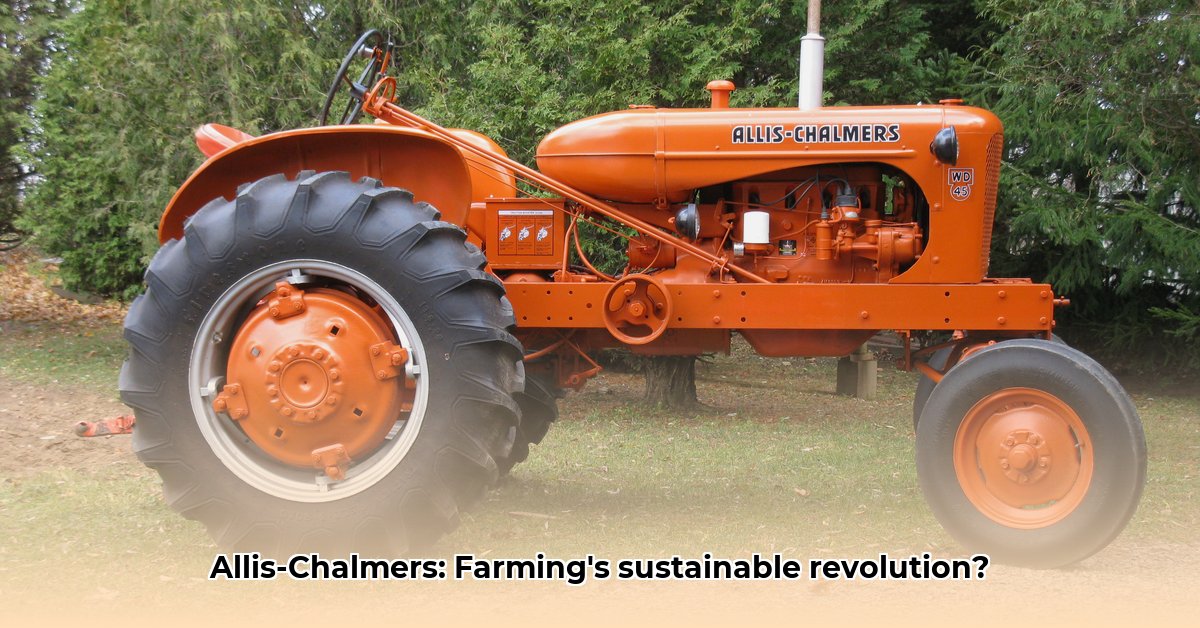
A Legacy of Steel: Allis-Chalmers and Their Enduring Presence
The deep orange hue of an Allis-Chalmers tractor, a familiar sight across generations of American farms, often evokes a sense of nostalgia. These machines, renowned for their robustness and reliability, represent a bygone era of agricultural engineering. But as farming increasingly prioritizes sustainability, the question arises: can these vintage workhorses continue to play a role in modern agriculture? This article explores the legacy of Allis-Chalmers tractors and examines their place within a more environmentally conscious farming landscape. For more on Allis-Chalmers garden tractors, see this resource.
A Blast from the Past: The Allis-Chalmers Story
Allis-Chalmers tractors weren't merely machines; they were symbols of an era prioritizing durability. Built to withstand the rigors of farming for decades, these tractors often became family heirlooms, passed down through generations, a testament to their robust construction and dependable performance. This inherent longevity translates to reduced equipment turnover and associated environmental impact.
The Sustainability Tightrope: Weighing the Pros and Cons
The decision of whether to continue using an Allis-Chalmers tractor is multifaceted. While their longevity contributes to reduced equipment replacement, several factors challenge their environmental sustainability. Their older engines generally exhibit lower fuel efficiency compared to modern models, leading to higher fuel consumption and a larger carbon footprint. Fuel efficiency is a critical factor in the environmental footprint of farming operations.
A Comparative Analysis: Allis-Chalmers vs. Modern Tractors
| Feature | Allis-Chalmers Tractor (Older Model) | Modern Tractor |
|---|---|---|
| Upfront Cost | Significantly Lower (used market) | Significantly Higher |
| Fuel Efficiency | Lower, leading to higher fuel costs | Significantly Higher, resulting in lower fuel costs |
| Repair Costs | Potentially Very High (parts availability and cost) | Generally Lower (easier parts acquisition and lower cost) |
| Environmental Impact | Higher fuel consumption, potential environmental cost of parts sourcing and disposal | Lower fuel consumption, often built with efficiency in mind, better disposal options available |
| Longevity | High (with proper maintenance) | Varies greatly depending on manufacturer, model, and maintenance |
Moreover, sourcing replacement parts for older Allis-Chalmers models can be difficult, leading to increased downtime and potentially higher repair costs. The environmental impact of manufacturing, shipping, and eventually discarding these parts also needs careful consideration. Isn't it a compelling argument to calculate the overall cost, environmental and economic, of maintaining an older machine versus investing in a more sustainable alternative?
Modern Implications: Balancing Heritage and Sustainability
Farmers today face immense pressure to adopt sustainable practices while managing operational costs. The use of older, reliable equipment like Allis-Chalmers tractors presents a classic dilemma. While these machines offer initial cost savings, their lower fuel efficiency and parts availability challenge their long-term economic and environmental viability. This crucial decision requires farmers to weigh the short-term benefits of proven reliability against the potential long-term costs of reduced efficiency and environmental impact.
The Regulatory Landscape: Navigating Environmental Compliance
The regulatory environment further complicates the issue. Stringent emissions standards and waste disposal regulations continue to evolve, potentially rendering older tractors non-compliant and subject to penalties. Farmers must understand these regulations to ensure their operations remain legally compliant and environmentally responsible. How will evolving emission standards and waste management regulations shape the future of vintage tractor use?
Conclusion & Recommendations
The question of Allis-Chalmers tractors' role in sustainable agriculture necessitates a holistic approach. While these tractors offer a legacy of dependability, their lower fuel efficiency, parts availability challenges, and potential non-compliance with emission standards present significant hurdles.
Actionable Recommendations:
- For Farmers: Carefully weigh the total cost of ownership (including fuel, repairs, and potential penalties) of an older tractor against the investment in a more fuel-efficient, modern alternative. Consider precision agriculture techniques to optimize fuel use.
- For Parts Suppliers: Invest in efforts to improve the availability and sustainability of replacement parts for older tractors, potentially through remanufacturing or partnerships with recycling organizations.
- For Researchers: Investigate methods to improve the fuel efficiency and reduce emissions of older tractor engines. Explore the environmental impacts of various repair and parts sourcing methodologies.
- For Policymakers: Develop incentive programs to encourage farmers to transition to more sustainable equipment, while also considering the needs of those who rely on older, more affordable machinery.
The future of sustainable agriculture requires a balanced approach, one that values both the heritage and reliability of older equipment like Allis-Chalmers tractors with the environmental imperatives that shape modern farming.